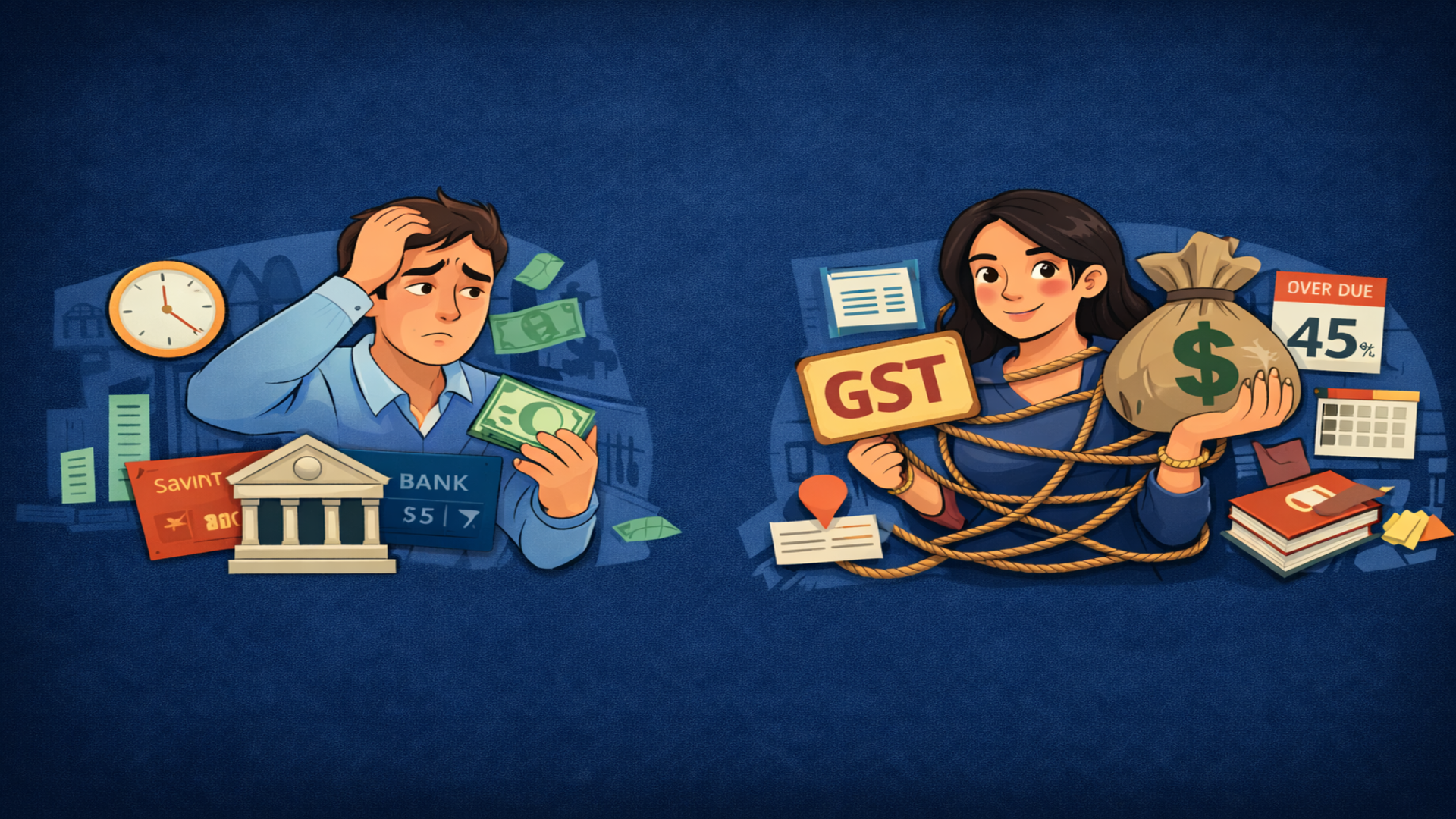
Most founders don’t have ‘bad intentions’ with money. They need to be fast under pressure and need to handle a business that needs decisions almost every day.
But when it comes to money shortcuts, it is important to understand that they don’t stay small. They pile up over time, and then one slow-paying client, or one tax date or one bad month exposes everything.
India’s own MSME ministry data shows how real the pressure is: since the MSME Samadhaan portal started (Oct 2017), 2,16,221 delayed-payment applications were filed up to 15 Dec 2024, involving ₹47,677.28 crore.
That doesn’t excuse a founder’s poor habits. It just explains why they slip into them.
Here are 10 that usually are the worst.
1) One bank account for everything
If personal spends and business spends are made from the same account, you might not truly understand what the business really made. And every time you ask, ‘How are we doing?’, it just creates more confusion. Even basic separation is not common in small informal businesses. One India-focused report notes that only 39% keep separate bank accounts for business operations.
2) “We’ll do accounts later.”
This one is quite common. You see, later becomes month-end, and in some cases, the month-end becomes ‘after the season’. And in worst case scenarios, it gets delayed till eternity. When you don’t have the records, you don’t have control. That same report says only 32% maintain written business records like profit and loss statements.
3) Running the business on memory
You remember what a customer owes, what you paid a vendor, and what stock is left. Until you don’t. This is how leakage happens without anyone stealing. It’s just a drift, a rather unending one. A World Bank note on informal businesses makes the same point in a blunt way: less than half keep written business records or separate business and household finances.
4) ‘Bhai, ho jayega’ deals
Some deals are made without any written terms or a clear due date. There is no proof of what was agreed upon. This causes collections to become awkward. Then, the disputes become emotional, and eventually your team can’t follow a process simply because there isn’t one in the first place. That India report puts a number on it: only 18% had formal contractual agreements with customers, and only 20% procured supplies with paperwork or a formal contract.
5) Treating GST collections like usable cash
This one is common because it feels harmless in the moment. Cash comes in, and the business needs to breathe. But tax money is not free working capital. It’s money you’re holding for a deadline. If you’ve ever felt fear around a due date, this habit is usually involved.
6) Credit without a ceiling
Founders often give credit to keep the relationship. Then they extend it. Then they extend it again. At some point, you stop being a supplier and start being a lender. But that wasn’t your business in the first place, was it?
And yes, the law matters. MSMED Act provisions around delayed payments are built around the idea that payment shouldn’t stretch beyond 45 days for MSE suppliers, and buyers can be liable for interest.
7) Founder salary = random withdrawals
Some founders don’t withdraw salary for months and then take a big withdrawal. Or sometimes, they take small withdrawals every few days. All of it makes the businesses hard for businesses to plan, and it also makes your personal life unstable, which then forces you to make worse business decisions. A fixed monthly payout (even if it’s modest) is not ‘corporate behavior.’ It’s basic control.
8) Celebrating revenue while cash is falling
You can be “growing” and still be broke. If your cash collection lags, your business is carrying the cost of growth while customers enjoy the benefit of delayed payment. This is where founders fool themselves. Not because they’re dumb. Because revenue feels like a win, and cash feels like anxiety.
9) Paying vendors late as a habit
Sometimes you’re genuinely stuck, and that’s okay. But if late payments become your default strategy, you pay for it in other ways: worse terms, weaker priority, less trust, and more stress when you actually need support. This also makes your own collections harder, because you lose the moral ground to push buyers.
10) Treating manual work as ‘normal’
Founders accept repetitive work as part of life: sorting bills, matching bank entries, chasing missing invoices, fixing errors at month-end. But if your accounting is mostly manual, you’re not ‘saving money.’ You’re paying with time, errors, and missed decisions. This is the part founders don’t say out loud: the worst cost of manual work is not effort. It’s that you don’t see problems early.
A simple way to think about fixing this
You don’t need a fancy finance team. You need a cleaner system. At Accomation.io, we explain it in a very simple, very practical way:
Pull → Process → Push
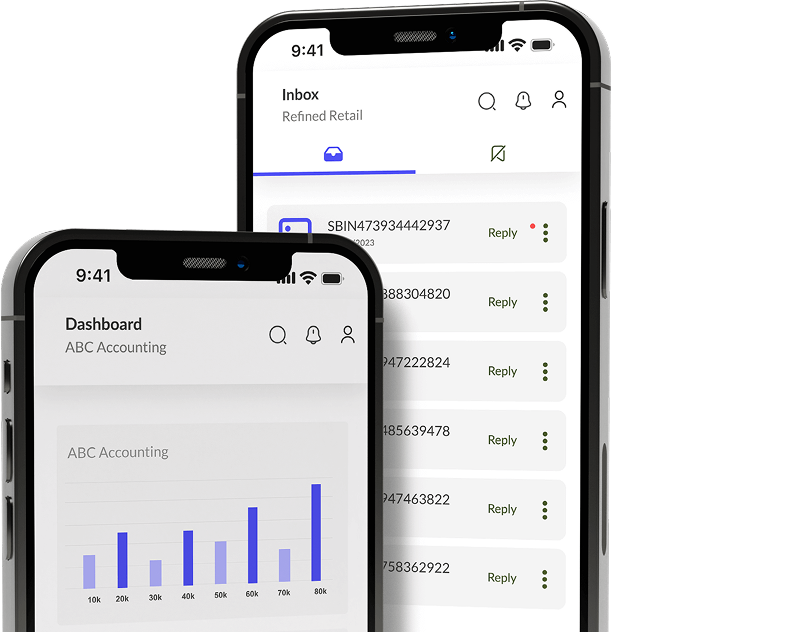
Pull data from PDFs, images, and bank statements. Process it so it’s usable. Push it into your accounting software.
Not to sound futuristic. Just so you’re not doing “month-end panic” every month.
If you want to start small, pick just two habits from this list and fix them for 30 days. If you try to fix all 10 at once, you won’t fix any.
 Recent blogs