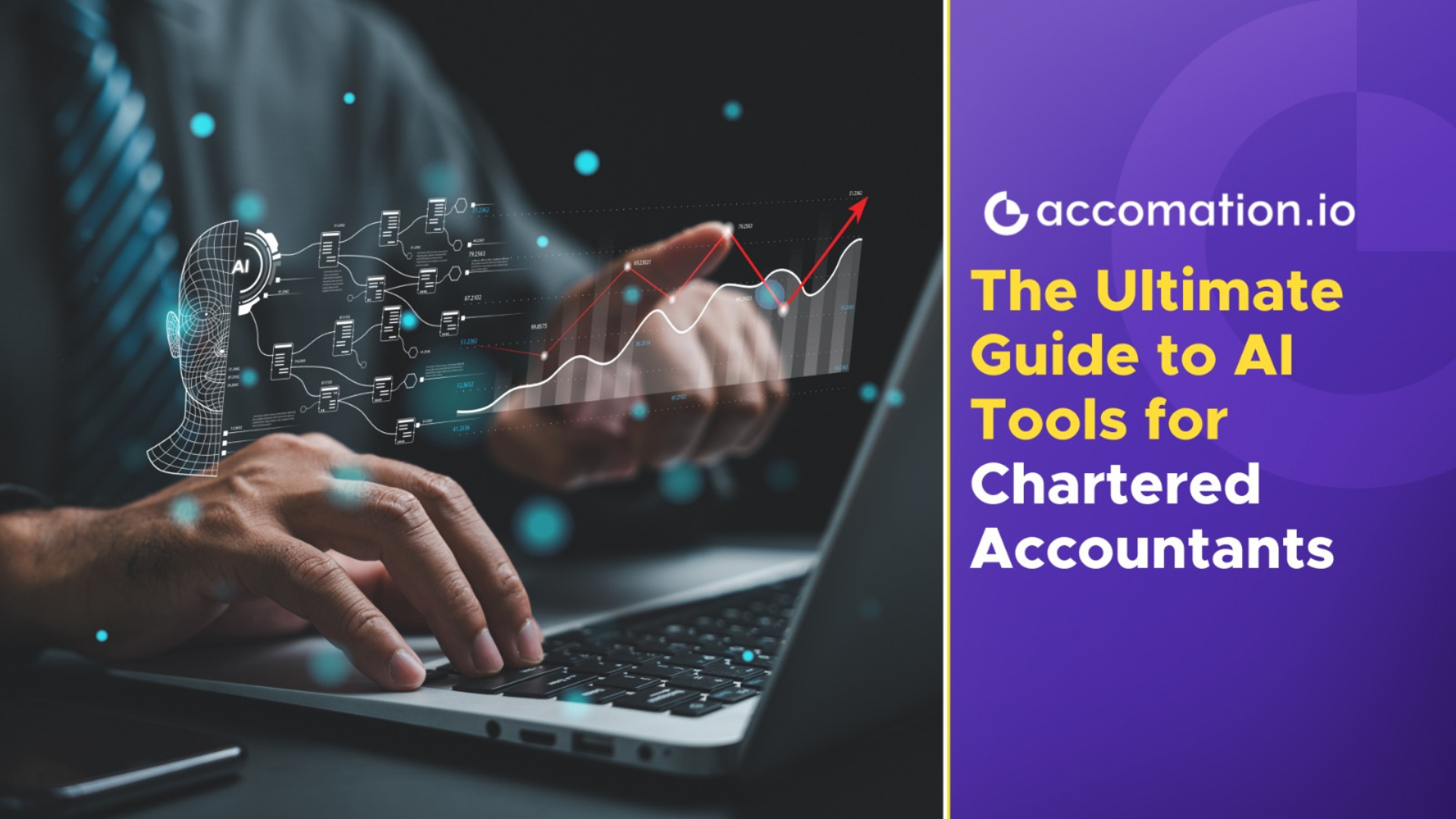
Artificial intelligence is becoming an essential part of modern accounting. It helps finance teams automate document processing, extract and organize financial data, process bank statements, reduce repetitive data entry, and prepare accurate accounting information for faster review and decision-making.
That is why AI tools for chartered accountants should be judged by the work they remove, not by how advanced they sound. A CA firm needs technology that fits existing processes and gives accountants more time for work that requires judgement.
What Artificial Intelligence in Accounting Means
Artificial intelligence in accounting refers to software that can read, classify, or structure financial information with limited manual effort. Some tools support research and drafting. Others focus on invoices, receipts, bank statements, bookkeeping, reconciliation, and reporting.
The useful distinction is between general AI and purpose-built AI accounting tools. A general assistant may draft an email. An AI accounting platform is designed around financial documents and accounting workflows.
AI accounting software can identify an invoice number, date, taxable value, tax amount, vendor name, narration, debit, credit, and balance. This allows data to be prepared before a person checks and approves it.
In practice, AI for accountants works best as a preparation layer. It handles repetitive tasks while the accountant remains responsible for accuracy.
Where AI Helps CA Firms Most
The clearest use cases for AI for CAs are often found before entries are finalised. Bills may arrive through email, messaging apps, shared folders, scans, or spreadsheets. Someone still has to read them, enter the details, and check what is missing.
Accounting automation for CA firms can reduce this work by extracting and organising information before it reaches the accounting system. For teams exploring AI for chartered accountants, this is a sensible place to begin because the task is frequent and measurable.
Invoice and Document Processing
AI data entry automation can read invoice and receipt details from PDFs, images, or spreadsheets. Instead of creating every entry manually, the team reviews information that has already been extracted.
This is where AI document processing software for accountants differs from basic OCR. OCR may recognise text, but accounting software must understand what it represents. It should distinguish an invoice number from a GST number and a taxable value from a grand total.
Good AI-powered accounting software should let users correct unclear fields before the information moves further. The aim is to reduce typing without removing control.
Bookkeeping and Accounting Preparation
AI bookkeeping software is useful when it turns source documents into accounting-ready information. With AI-powered bookkeeping, employees spend less time copying values and more time checking accuracy and resolving exceptions.
This matters when firms compare AI bookkeeping software for accountants. A CA firm may manage several clients, formats, and accounting environments, so it needs more than a simple expense-tracking app.
The strongest AI tools for bookkeeping and accounting should support multiple document types, structured review, audit trails, and integration with the software already in use.
Bank Statements and Reconciliation
Different banks use different layouts, descriptions are inconsistent, and UPI-heavy statements may contain hundreds of entries.
AI tools for bank statement processing can extract dates, narrations, debits, credits, balances, and references from PDF or Excel files. AI bank statement automation software can then structure this information for categorisation and review.
AI reconciliation software can compare records, identify matched entries, and draw attention to exceptions. It should make unusual or unmatched transactions easier to find.
These automated accounting solutions are useful when they reduce line-by-line checking without hiding how a result was reached.
Reporting and Financial Analysis
There are many AI tools for financial reporting and analysis, including spreadsheet assistants, dashboards, and forecasting products. But reporting quality still depends on the quality of the underlying data.
An AI financial management software product may focus on forecasts or dashboards. An AI accounting platform may focus on preparing the transactions that feed those reports. Both can be useful, but they solve different problems.
Benefits for Chartered Accountants
The practical benefits of AI for chartered accountants include less repetitive entry, faster document handling, more consistent data preparation, and better visibility into missing or unusual information.
This is also the clearest answer to how AI helps chartered accountants. Less time is spent opening files, typing values, and checking repeated work. More time can go towards review, compliance, analysis, and client conversations.
AI-powered accounting automation for businesses can help teams process larger volumes without increasing manual effort at the same rate. But it works well only when review responsibilities are clear.
How to Choose the Right Tool
There is no universal list of the best AI tools for chartered accountants. The right choice depends on workflow, client volume, document types, current software, and review requirements.
When comparing AI tools for accounting firms, check whether the product solves a specific problem, reads the documents clients actually send, supports review before posting, integrates with the accounting system, shows exceptions clearly, and provides suitable approval controls.
The same checks apply to accounting automation software, accounting automation software for chartered accountants, and broader AI accounting solutions for businesses.
The right AI accounting tools should reduce manual work without creating another disconnected process. And the right AI for CAs should support professional judgement, not bypass it.
A Practical Way to Begin
Start with one repetitive workflow, such as invoice entry or bank statement processing. Measure the current effort, then test whether the software extracts information accurately, supports review, and transfers the data cleanly.
This makes it easier to separate useful AI accounting software from products that simply add another interface.
And it keeps the objective clear: AI for chartered accountants isn't about replacing professional judgement. It is about reducing avoidable work so accountants can focus on decisions that require experience, context, and responsibility.
 Recent blogs